
Feeling constantly tired has become one of the most common complaints in modern life. Many people wake up exhausted, rely on caffeine to get through the day, and still feel drained by evening. While it’s easy to blame work pressure, age, or lack of time, the truth is that daily lifestyle habits play a much bigger role in energy levels than most people realize.
Energy is not something you suddenly gain or lose overnight. It is built—or depleted—through small, repeated actions. The way you sleep, eat, move, manage stress, and structure your day directly affects how energized you feel over time. The good news is that you don’t need a drastic makeover or extreme routine to feel better. Small, intentional lifestyle changes can create lasting improvements in your energy, focus, and overall vitality.
This article explores practical, realistic lifestyle changes that anyone can adopt. These changes are simple, sustainable, and designed to fit into real life. When practiced consistently, they help your body work more efficiently, your mind stay clearer, and your energy remain steady throughout the day.
Understanding Energy: Why You Feel Tired in the First Place
Before diving into solutions, it’s important to understand what energy really is. Energy is not just about physical strength—it’s a combination of physical, mental, and emotional capacity.
Low energy often comes from:
- Poor sleep quality
- Dehydration
- Nutrient-poor diets
- Sedentary lifestyles
- Chronic stress
- Excessive screen time
- Irregular routines
These factors slowly strain the body, disrupt hormones, and overload the nervous system. Over time, this leads to constant fatigue, brain fog, irritability, and lack of motivation.
Boosting energy doesn’t mean pushing yourself harder—it means supporting your body so it can function optimally.
1. Improving Your Morning Routine for Better Energy
The way you start your day sets the tone for your energy levels. Rushed mornings, skipping breakfast, or immediately checking your phone can leave your body and mind stressed before the day even begins.
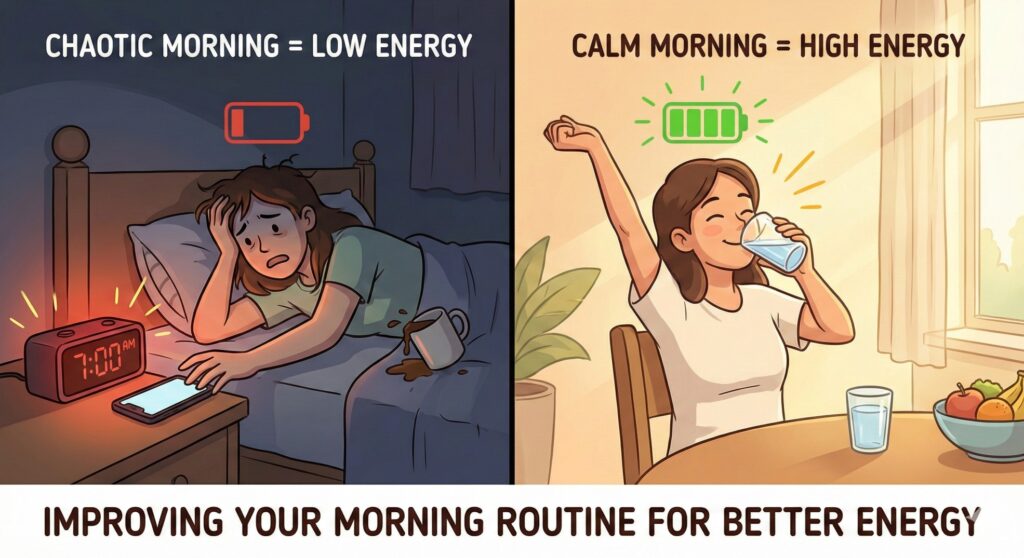
Small Morning Changes That Boost Energy
- Wake up at a consistent time
- Get natural light soon after waking
- Drink a glass of water
- Stretch or move gently
- Avoid scrolling on your phone immediately
Why Mornings Matter
Your body transitions from rest to activity in the morning. A chaotic start increases stress hormones, which can cause energy crashes later in the day.
You don’t need a perfect morning routine. Even adding one calm, grounding habit can significantly improve how energized you feel.
2. Hydration: One of the Simplest Energy Boosters
Dehydration is one of the most common—and overlooked—causes of low energy. Even mild dehydration can cause fatigue, headaches, and poor concentration.
How Hydration Affects Energy
Water helps transport nutrients, regulate body temperature, support digestion, and keep your brain alert. When you’re dehydrated, your body works harder, which leads to tiredness.
Easy Hydration Habits
- Drink water first thing in the morning
- Carry a reusable bottle
- Sip water throughout the day
- Drink water before meals
Many people mistake dehydration for hunger or fatigue. Simply increasing your daily water intake can lead to noticeable improvements in energy within days.
3. Eating for Steady Energy, Not Quick Fixes
Food is fuel, but not all fuel provides lasting energy. Highly processed foods and sugary snacks may give short bursts of energy, followed by crashes.
How Diet Impacts Energy Levels
Energy dips often come from unstable blood sugar levels. When meals lack balance, the body struggles to maintain steady energy.
Small Dietary Changes for More Energy
- Eat regular meals
- Include protein with each meal
- Add fiber-rich foods like fruits and vegetables
- Avoid skipping meals
- Limit excessive sugar intake
Mindful, balanced eating supports sustained energy rather than temporary boosts.
4. Daily Movement: Energy Comes From Motion
It may sound counterintuitive, but moving your body actually increases energy. A sedentary lifestyle slows circulation, stiffens muscles, and reduces oxygen flow—leading to fatigue.
Why Movement Boosts Energy
Movement improves blood flow, releases endorphins, and supports oxygen delivery to tissues. It also reduces stress and improves sleep quality.
Simple Ways to Move More

- Take short walks
- Stretch during breaks
- Use stairs instead of elevators
- Do light exercise at home
- Stand up regularly if you sit for long periods


4
You don’t need intense workouts. Consistency matters more than intensity.
5. Improving Sleep Quality for Long-Term Energy
Sleep is the foundation of energy. Without proper rest, even the healthiest habits lose effectiveness.
How Sleep Affects Energy
Sleep supports physical recovery, brain function, hormone balance, and emotional stability. Poor sleep leads to daytime fatigue and reduced focus.
Small Sleep Improvements That Matter
- Go to bed and wake up at the same time
- Reduce screen use before bedtime
- Create a calm bedtime routine
- Keep your sleeping environment dark and quiet
- Avoid heavy meals late at night
Quality sleep restores energy naturally and sustainably.
6. Managing Stress to Prevent Energy Drain
Chronic stress is one of the biggest energy killers. When your body stays in a constant state of alert, it becomes exhausted over time.
How Stress Drains Energy
Stress increases cortisol levels, disrupts sleep, affects digestion, and weakens immune function. This constant strain leads to burnout and fatigue.
Small Stress-Reducing Habits
- Deep breathing for a few minutes
- Taking short breaks during the day
- Spending time outdoors
- Journaling thoughts
- Creating boundaries around work and rest
Managing stress doesn’t mean eliminating it—it means giving your body regular chances to recover.
7. Reducing Screen Time and Mental Overload
Constant screen exposure overstimulates the brain and disrupts sleep patterns, leading to mental fatigue.
How Screens Affect Energy
Too much screen time strains the eyes, increases mental clutter, and interferes with natural sleep rhythms.
Small Screen-Use Adjustments
- Take screen breaks every hour
- Avoid screens during meals
- Reduce phone use before bed
- Replace some screen time with offline activities
Mental clarity plays a major role in how energized you feel.
8. Breathing Better for More Energy
Breathing is automatic, but many people breathe shallowly due to stress or poor posture.
Why Breathing Matters
Proper breathing improves oxygen delivery, calms the nervous system, and boosts mental alertness.
Simple Breathing Practices
- Take slow, deep breaths
- Practice breathing through your nose
- Pause for a few mindful breaths during the day
Better breathing supports both physical and mental energy.
9. Building Consistent Daily Routines
Your body thrives on rhythm. Irregular schedules confuse your internal clock, leading to energy fluctuations.
Why Consistency Boosts Energy
Consistent routines help regulate sleep, digestion, and hormone release.
Easy Routine Changes
- Eat meals at similar times
- Maintain regular sleep hours
- Schedule breaks and movement
- Balance work and rest
Consistency creates predictability, which reduces stress and conserves energy.
10. Social Connection and Emotional Energy
Energy isn’t only physical—it’s emotional too. Isolation and negative interactions can be draining, while meaningful connections are energizing.
How Connection Impacts Energy
Positive social interactions boost mood, reduce stress, and increase motivation.
Small Ways to Build Connection
- Check in with loved ones
- Engage in meaningful conversations
- Spend time with supportive people
Emotional well-being plays a powerful role in overall energy.
11. Letting Go of Perfectionism
Constant pressure to “do more” or “be better” can silently drain your energy.
Why Perfectionism Is Exhausting
It keeps the nervous system in a state of tension and prevents true rest.
Energy-Saving Mindset Shifts
- Focus on progress, not perfection
- Accept rest as productive
- Be kind to yourself during setbacks
Mental peace frees up enormous amounts of energy.
How Small Changes Create Big Energy Shifts
Each small habit supports the others:
- Better sleep improves focus and motivation
- Movement enhances mood and sleep
- Stress management improves digestion and energy
- Balanced eating stabilizes blood sugar
Energy improves most when habits work together, not in isolation.
Final Thoughts: Sustainable Energy Comes From Daily Choices
Boosting your energy doesn’t require extreme routines, expensive supplements, or constant motivation. It requires small, intentional lifestyle changes practiced consistently.
Start with one change. Make it manageable. Let it become part of your daily life. Over time, these small shifts will transform how you feel—physically, mentally, and emotionally.
Your energy is not something you need to chase. When you support your body and mind, energy becomes your natural state—steady, reliable, and sustainable.
Frequently Asked Questions (FAQs)
1. How can small lifestyle changes boost energy levels?
Small lifestyle changes support your body’s natural energy systems. Habits like better sleep, regular movement, proper hydration, balanced meals, and stress management improve circulation, hormone balance, and mental clarity, leading to more consistent energy throughout the day.
2. How long does it take to feel more energetic after lifestyle changes?
Some people notice improvements within a few days, especially from better hydration or sleep. Long-term energy improvements typically develop over several weeks as habits become consistent and the body adapts.
3. What is the easiest lifestyle change to increase energy?
Drinking more water, improving sleep routines, and taking short daily walks are among the easiest and most effective ways to increase energy with minimal effort.
4. Can lifestyle changes reduce constant fatigue?
Yes. Chronic fatigue is often linked to poor sleep, stress, dehydration, and lack of movement. Addressing these factors through small daily changes can significantly reduce ongoing tiredness and burnout.
5. Does diet play a role in energy levels?
Absolutely. Balanced meals with protein, fiber, and healthy fats help maintain stable blood sugar levels, preventing energy crashes and supporting sustained energy throughout the day.
6. Is exercise necessary to feel more energized?
Exercise helps, but it doesn’t have to be intense. Gentle daily movement like walking, stretching, or light activity can improve circulation and boost energy without causing exhaustion.
7. How does sleep affect daily energy?
Sleep allows the body and brain to recover. Poor sleep disrupts hormones, reduces focus, and increases fatigue. Consistent, quality sleep is one of the most important factors for long-term energy.
8. Can stress really drain energy?
Yes. Chronic stress keeps the body in a constant state of alert, which uses a large amount of energy. Managing stress through breathing, rest, and relaxation helps conserve and restore energy.
9. How can I increase energy naturally without caffeine?
Natural ways to boost energy include staying hydrated, eating balanced meals, moving your body regularly, getting sunlight, managing stress, and maintaining a consistent sleep schedule.
10. Are lifestyle changes better than energy supplements?
Lifestyle changes address the root causes of low energy, while supplements often provide short-term effects. Sustainable energy comes from daily habits that support overall health and balance.
Pingback: hello world