
Introduction
In today’s world, more people are struggling with allergies. A child might sneeze during spring, an adult could have itchy skin after eating certain foods, or someone might find it hard to breathe because of dust. Allergies have become one of the most common health issues worldwide. Studies show that millions are affected each year, and the numbers keep rising.
But why is this happening? Why are allergies so common? Are they more dangerous now, or are we just more aware of them? In this blog, we will explore everything about allergies. We will look at what they are, why they are spreading, and how we can prevent and manage them. We will use simple and easy language.
1. What Are Allergies?
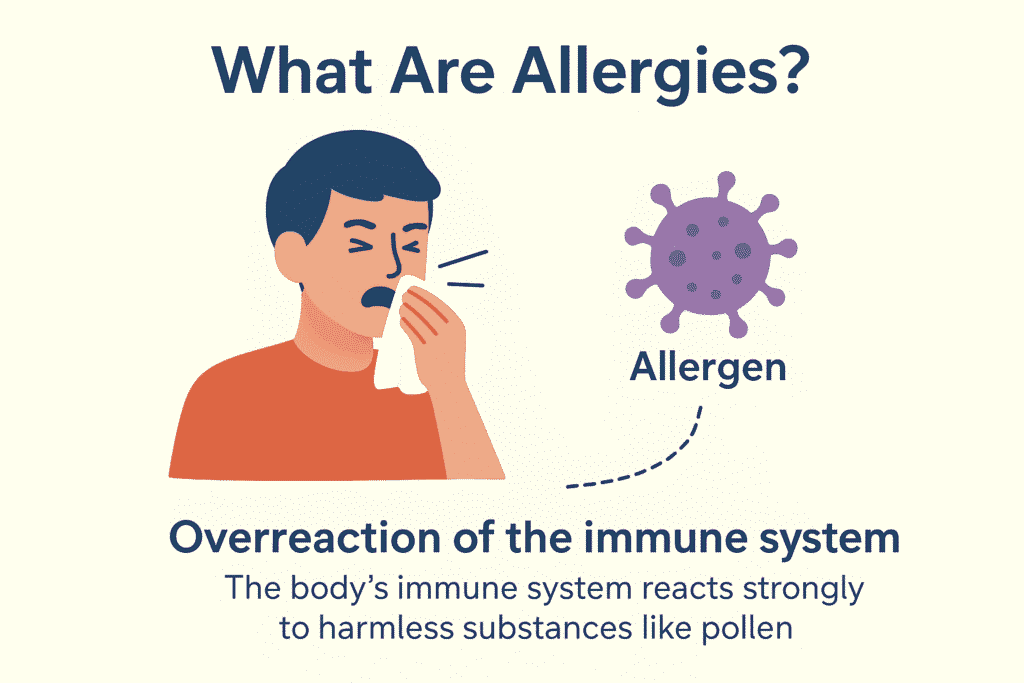
An allergy is the body’s strong response to something that is usually harmless. These substances are called allergens. Most people don’t have any issues with allergens, but for those with allergies, the immune system sees them as threats and reacts intensely.
When the immune system finds an allergen, it releases chemicals like histamine. This leads to symptoms such as sneezing, itching, swelling, or even trouble breathing.
For example, if two people eat peanuts, one enjoys them, while the other may get rashes or have difficulty breathing. The second person has a peanut allergy.
2. Types of Allergies
Allergies can affect various parts of the body. Let’s look at the most common types:
a) Food Allergies
- Caused by foods like peanuts, milk, eggs, shellfish, soy, and wheat.
- Symptoms include stomach pain, vomiting, rashes, swelling, or even a severe reaction known as anaphylaxis.
- Food allergies are increasing among children worldwide.
b) Seasonal Allergies (Hay Fever)
- Triggered by pollen from trees, grasses, and flowers, especially in spring and autumn.
- Symptoms include sneezing, a runny nose, watery eyes, and an itchy throat.
c) Skin Allergies
- Caused by insect bites, chemicals in soaps or cosmetics, or metals like nickel.
- Symptoms: rashes, redness, blisters, or swelling.
- Examples: eczema, hives, contact dermatitis.
d) Respiratory Allergies (Asthma & Rhinitis)
- Dust mites, mold, animal dander, and pollution can cause breathing problems.
- Symptoms include coughing, wheezing, and shortness of breath.
- Allergic asthma is becoming more common in cities with high pollution.
e) Drug Allergies
- Some people have negative reactions to medicines like antibiotics (penicillin), painkillers, or vaccines.
- Symptoms include rashes, itching, fever, or difficulty breathing.
f) Insect Allergies
- Reactions to stings from bees, wasps, or mosquitoes can vary.
- They can go from mild swelling to severe anaphylaxis.
3. Why Are Allergies Spreading Nowadays?
One of the biggest questions is why allergies are increasing at such a fast rate. There are several reasons:
a) Pollution
Air pollution from vehicles, industries, and burning waste raises dust and harmful particles. These can cause respiratory allergies.
b) Lifestyle Changes
Modern lifestyles involve less outdoor activity, more processed foods, and reduced exposure to natural environments. This weakens the immune system and increases the chance of allergies.
c) Climate Change
Changing seasons, warmer temperatures, and longer pollen seasons mean people face allergens for longer periods.
d) Hygiene Hypothesis
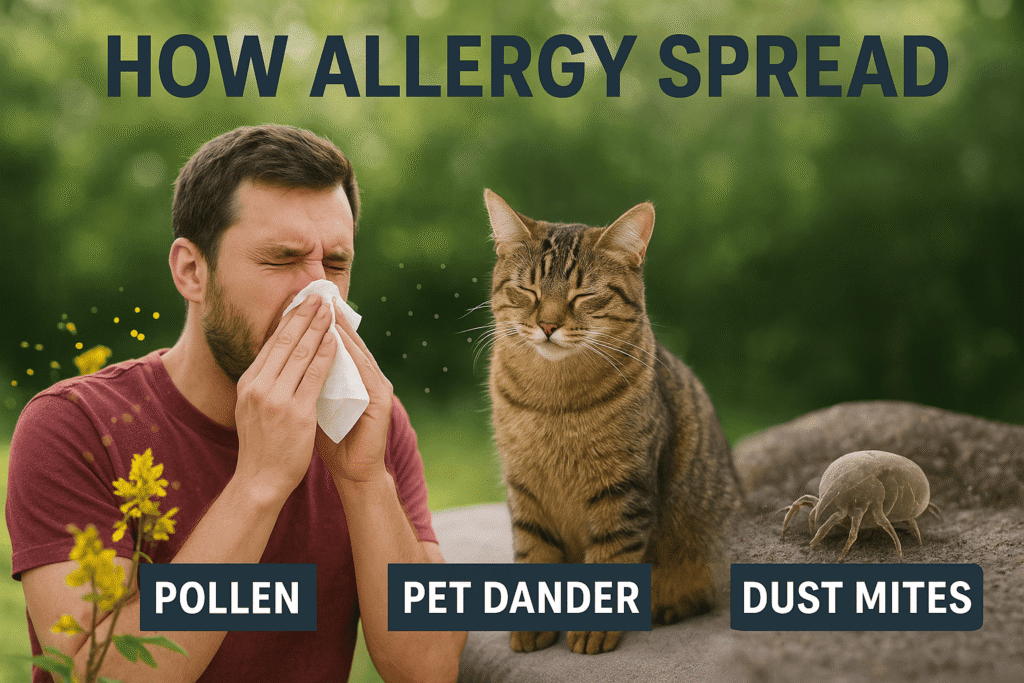
Children today grow up in cleaner environments with less exposure to bacteria. While this seems good, it may lower natural immunity and cause the immune system to overreact to harmless substances.
e) Processed Foods and Additives
Artificial colours, preservatives, and fast food may raise the risk of food-related allergies.
f) Increased Awareness and Diagnosis
Doctors and parents are now more aware of allergies. As a result, more cases are being reported.
4. Common Symptoms of Allergies
Symptoms vary depending on the type of allergy, but common ones include:
- Sneezing, a runny nose, and a blocked nose
- Itchy, watery eyes
- Skin rashes, redness, or swelling
- Stomach pain, vomiting, and diarrhea (in food allergies)
- Coughing, wheezing, and chest tightness (in asthma)
- Severe reaction: anaphylaxis (difficulty breathing, low blood pressure, unconsciousness; medical emergency)
5. How Are Allergies Diagnosed?
Doctors use several methods:
- Medical History – Understanding when symptoms occur.
- Skin Prick Test – Small drops of allergens are placed on the skin, and if it reacts, allergy is confirmed.
- Blood Test – Measures antibodies (IgE) in the blood.
- Elimination Diet – Removing certain foods and reintroducing them to check for reactions.
6. Prevention and Management
Allergies cannot always be cured, but they can be managed.
a) Avoid Triggers
- Keep houses free of dust.
- Wash bed sheets regularly.
- Avoid foods that trigger reactions.
- Wear masks in areas with pollution.
b) Medications
- Antihistamines – Reduce itching and sneezing.
- Decongestants – Reduce blocked nose.
- Inhalers – For asthma.
- Epinephrine injection (EpiPen) – For severe allergic reactions.
c) Lifestyle Tips
- Eat a healthy, balanced diet.
- Exercise regularly to boost immunity.
- Spend some time in natural environments to strengthen resistance.
7. Allergies in India and Globally
Allergies are no longer limited to a small group of people—they have become a global health problem. From developed nations to developing countries like India, the number of people suffering from different types of allergies is rising every year. Let’s understand how allergies affect people in India and around the world.
🌍 Allergies Globally
- According to the World Allergy Organization (WAO), almost 30–40% of the world’s population is affected by one or more allergic diseases.
- In developed countries like the USA, UK, Australia, and Canada, food allergies are among the most common health concerns, especially in children. For example, peanut and shellfish allergies are widespread in Western countries.
- Seasonal allergies caused by pollen, dust, and mold are also a leading cause of illness worldwide. In many countries, seasonal allergies are among the top reasons for doctor visits during spring and fall.
- Asthma, which is often linked to respiratory allergies, affects more than 260 million people worldwide (WHO 2023 data).
- Climate change has made pollen seasons longer and stronger, leading to more cases of hay fever and allergic asthma globally.
🇮🇳 Allergies in India
- In India, respiratory allergies are very common, mainly due to air pollution, dust, and smoke. Cities like Delhi, Mumbai, and Kolkata often have high rates of allergic asthma and rhinitis.
- Food allergies are being reported more frequently in recent years. Though still lower than in Western countries, allergies to milk, egg, peanuts, and seafood are increasing.
- A study by the Indian Council of Medical Research (ICMR) suggests that almost 20–30% of Indians suffer from at least one allergy, and around 15% of schoolchildren in cities are affected by asthma or allergic rhinitis.
- Rapid urbanization and lifestyle changes are also contributing. Children growing up in cities, with less exposure to natural environments, are more likely to develop allergies compared to those in rural areas.
- In India, there is also a lack of awareness—many people confuse allergies with common infections, which delays proper treatment.
📊 Comparison: India vs. Global
| Most Common Allergy | Respiratory (dust, smoke, pollen) | Food (peanut, shellfish) |
| Main Cause | Pollution, dust, lifestyle change | Processed foods, pollen |
| Awareness Level | Moderate to low | High (routine testing) |
| Children Affected | 10–15% with asthma/allergic rhinitis | 8–10% with food allergies |
| Trend | Increasing rapidly | Increasing steadily |
8. Future Outlook
Allergies are no longer seen as minor health problems—they are now recognized as a growing global health challenge. If the current trend continues, experts predict that allergies will affect half of the world’s population by 2050. The future outlook highlights both challenges and opportunities in managing this rise.
🌍 Global Perspective
- Rising Numbers: Allergic diseases such as asthma, food allergies, and hay fever are expected to keep increasing, especially in developing countries as they become more urbanized and industrialized.
- Climate Change Effect: Longer pollen seasons, warmer temperatures, and rising pollution levels will likely make respiratory allergies worse.
- Lifestyle Factors: Sedentary lifestyles, processed foods, and reduced exposure to natural environments will continue to weaken immunity and increase allergy cases.
🧪 Advances in Science & Medicine
The good news is that researchers are working on better ways to manage and possibly prevent allergies:
- Allergy Vaccines (Immunotherapy): Scientists are improving treatments that train the immune system to tolerate allergens over time.
- New Medicines: Development of drugs that block histamine or other immune chemicals with fewer side effects.
- Biological Therapies: Special injections targeting specific immune pathways (already in use for severe asthma and eczema).
- Gene Research: Studying genetic links to allergies may one day allow for personalized treatments.
🇮🇳 Future of Allergies in India
- With pollution levels in Indian cities remaining high, respiratory allergies and asthma are likely to rise.
- Increased use of processed foods may cause more cases of food allergies in urban children.
- The Indian healthcare system needs more awareness programs, allergy testing centers, and trained specialists to manage this growing problem.
💡 What Individuals and Communities Can Do
- Awareness Campaigns: Schools, offices, and communities should spread knowledge about allergies.
- Preventive Lifestyle: Healthy eating, regular exercise, and reduced exposure to triggers can lower risks.
- Stronger Policies: Governments can help by reducing pollution, improving food labeling, and promoting clean environments.
Conclusion
Allergies are common now. They affect millions of people daily. Factors like modern living, pollution, and shifting environments contribute to this rise. The good news is that we can manage allergies through awareness, prevention, and treatment.
Simple actions, such as keeping homes clean, avoiding allergens, eating well, and visiting doctors, can lead to significant improvements. Together, we can lessen the impact of allergies and enhance our quality of life.
❓ Frequently Asked Questions (FAQs) on Allergies
1. What is an allergy?
An allergy occurs when the body overreacts to something harmless, such as dust, pollen, or certain foods. The immune system mistakenly views it as a threat and responds by causing symptoms like sneezing, itching, rashes, or breathing problems.
2. Why are allergies increasing nowadays?
Allergies are increasing due to pollution, climate change, processed foods, reduced outdoor activity, and weaker immunity from modern lifestyles.
3. What are the most common types of allergies?
- Food allergies (milk, peanuts, shellfish)
- Seasonal allergies (pollen, grass)
- Skin allergies (soaps, metals, insect bites)
- Respiratory allergies (dust, pollution, animal dander)
- Drug allergies (antibiotics, painkillers)
4. Can allergies be cured permanently?
Most allergies cannot be fully cured. However, they can be managed with medications, lifestyle changes, and avoiding triggers. Some treatments, such as immunotherapy, may lessen symptoms over time.
5. Are allergies dangerous?
Yes, some allergies can be dangerous. Mild allergies cause sneezing or rashes. However, severe reactions like anaphylaxis, which include sudden breathing difficulty, swelling, and low blood pressure, can be life-threatening. Immediate medical help is needed.
6. How do doctors test for allergies?
Doctors use:
- Skin prick test (placing allergens on skin)
- Blood test (measuring allergy antibodies)
- Elimination diet (removing foods to see reactions)
7. What foods commonly cause allergies?
Peanuts, milk, eggs, soy, wheat, shellfish, and tree nuts (like almonds and walnuts) are the most common food allergens.
8. Can children outgrow allergies?
Yes, some children may outgrow allergies like milk or egg allergy as they get older. But others, like peanut or shellfish allergies, often stay for life.
9. How can I prevent allergies at home?
- Keep your home dust-free
- Wash bedsheets regularly
- Avoid pets if you are allergic
- Eat healthy food to boost immunity
- Stay indoors when pollen levels are high
- Use air purifiers if pollution is severe
10. When should I see a doctor for allergies?
See a doctor if:
- Allergies disturb your daily life
- You have frequent breathing problems
- Symptoms don’t improve with home care
- You ever experience severe reactions like swelling of lips, tongue, or breathing difficulty
📚 References
- World Health Organization (WHO). Allergic diseases and asthma. Available at: https://www.who.int
- World Allergy Organization (WAO). White Book on Allergy 2020: Update. WAO Journal.
- Centers for Disease Control and Prevention (CDC). Allergies & Asthma Information. Available at: https://www.cdc.gov
- National Institute of Allergy and Infectious Diseases (NIAID). Understanding Allergies. U.S. Department of Health & Human Services.
- Pawankar R, Canonica GW, Holgate ST, Lockey RF. Allergic diseases and asthma: A major global health concern. World Allergy Organization Journal. 2011.
- Mayo Clinic. Allergies – Symptoms and Causes. Available at: https://www.mayoclinic.org
- Indian Council of Medical Research (ICMR). Allergy and Asthma in India: Current trends. 2022.
- American College of Allergy, Asthma, and Immunology (ACAAI). Allergy Statistics and Facts. Available at: https://acaai.org
- Sicherer SH, Sampson HA. Food allergy: Epidemiology, pathogenesis, diagnosis, and treatment. Journal of Allergy and Clinical Immunology. 2014.
- Global Asthma Network. The Global Impact of Asthma and Allergies. Report 2022.
- Pharma Rising https://rxcures.com/
It’s perfect time to make some plans for the future and it is time to be happy. I have read this publish and if I may I desire to recommend you some attention-grabbing issues or suggestions. Perhaps you could write next articles relating to this article. I want to read even more things about it!
I would like to thnkx for the efforts you have put in writing this blog. I am hoping the same high-grade blog post from you in the upcoming as well. In fact your creative writing abilities has inspired me to get my own blog now. Really the blogging is spreading its wings quickly. Your write up is a good example of it.
Some really good information, Gladiola I detected this. “The past is a guide post, not a hitching post.” by L. Thomas Holdcroft.
Some genuinely nice stuff on this internet site, I love it.
I absolutely love your blog and find almost all of your post’s to be just what I’m looking for. Would you offer guest writers to write content in your case? I wouldn’t mind composing a post or elaborating on some of the subjects you write in relation to here. Again, awesome web site!
I really like your writing style, excellent information, thankyou for putting up : D.
I reckon something genuinely special in this internet site.
Real clear website , thankyou for this post.
After all, what a great site and informative posts, I will upload inbound link – bookmark this web site? Regards, Reader.
You should take part in a contest for one of the best blogs on the web. I will recommend this site!
Really well written
I truly wanted to write a brief note so as to express gratitude to you for all the stunning secrets you are showing at this website. My considerable internet look up has at the end been compensated with excellent information to write about with my visitors. I would point out that we visitors actually are truly blessed to dwell in a magnificent website with very many lovely professionals with very beneficial methods. I feel really blessed to have discovered your entire web page and look forward to plenty of more exciting moments reading here. Thank you again for a lot of things.
Everything is very open and very clear explanation of issues. was truly information. Your website is very useful. Thanks for sharing.
Very interesting details you have noted, appreciate it for posting. “In a great romance, each person plays a part the other really likes.” by Elizabeth Ashley.
I really treasure your piece of work, Great post.
Thanks for any other informative website. The place else could I get that kind of information written in such a perfect method? I have a project that I’m just now operating on, and I have been on the look out for such info.