
Dengue fever is a major health concern worldwide, affecting millions of people each year, especially in tropical and subtropical regions. Despite advances in medicine, dengue remains a problem because it spreads rapidly, is hard to control, and lacks a specific cure.
The good news is that dengue can be prevented. Unlike some diseases that come unexpectedly, dengue allows us the chance to protect ourselves if we know what causes it and take effective preventive actions.
In this blog, we’ll discuss the causes of dengue, how it spreads, why it’s dangerous, and most importantly, what you can do to prevent it. Let’s dive in together.
What is Dengue?
- Dengue is a viral infection transmitted by the bites of infected mosquitoes, mainly the Aedes aegypti and Aedes albopictus species. These mosquitoes can also spread diseases like Zika, chikungunya, and yellow fever.
- Dengue is sometimes referred to as “breakbone fever” because it causes severe joint and muscle pain that can feel like breaking bones. It can affect people of all ages, including children, adults, and the elderly.
- Globally, dengue is one of the fastest-spreading mosquito-borne diseases. Health organizations estimate that about half of the world’s population is at risk of contracting it.
Causes of Dengue
When we discuss the “cause” of dengue, it’s important to understand a few key points:
1. The Dengue Virus (DENV):
- Dengue is caused by the dengue virus, which has four main types: DENV-1, DENV-2, DENV-3, and DENV-4.
- If a person gets infected with one type, they gain immunity only against that type, not the others. This is why someone can suffer from dengue multiple times throughout their life.
2. The Mosquito Vector (Aedes aegypti):
- Dengue does not spread directly from person to person. Instead, mosquitoes serve as carriers, known scientifically as vectors.
- When an Aedes mosquito bites a person already infected with dengue, the virus enters the mosquito. Later, when that mosquito bites a healthy person, the virus is transmitted.
3. Environmental Factors:
- Stagnant water in containers, flowerpots, tires, buckets, and clogged drains provides ideal breeding grounds for Aedes mosquitoes.
- Warm and humid climates promote mosquito growth. This is why dengue cases spike during and after rainy seasons in tropical areas.
4. Human Behavior:
- Poor waste management, storing water without proper covers, and a lack of awareness increase the risk.
- Traveling internationally also contributes to the spread of dengue from one region to another.
How Dengue Spreads
Understanding how dengue spreads shows why prevention is crucial.
- Step 1: A mosquito bites a person already infected with dengue.
- Step 2: The virus multiplies inside the mosquito for about 8 to 12 days.
- Step 3: The same mosquito then bites a healthy person and injects the virus into their bloodstream.
- Step 4: The new person develops symptoms within 4 to 10 days.
Unlike malaria mosquitoes that mainly bite at night, Aedes mosquitoes tend to bite during the daytime, especially in the early morning and late afternoon.
Symptoms of Dengue
While it’s important to know the causes and prevention methods, recognizing symptoms is also vital because early detection can save lives.
Common symptoms include:
- Sudden high fever
- Severe headache
- Pain behind the eyes
- Muscle and joint pain
- Skin rash
- Nausea and vomiting
- Fatigue
In some cases, dengue can evolve into severe dengue (also known as dengue hemorrhagic fever), which can result in internal bleeding, organ failure, and even death if not treated promptly. Warning signs include:
- Persistent vomiting
- Severe abdominal pain
- Difficulty breathing
- Bleeding gums or nose
- Blood in vomit or stool
Prevention of Dengue
Now for the most crucial part: how do we prevent dengue? Since no specific cure or broadly available vaccine exists for everyone, prevention is our best option.
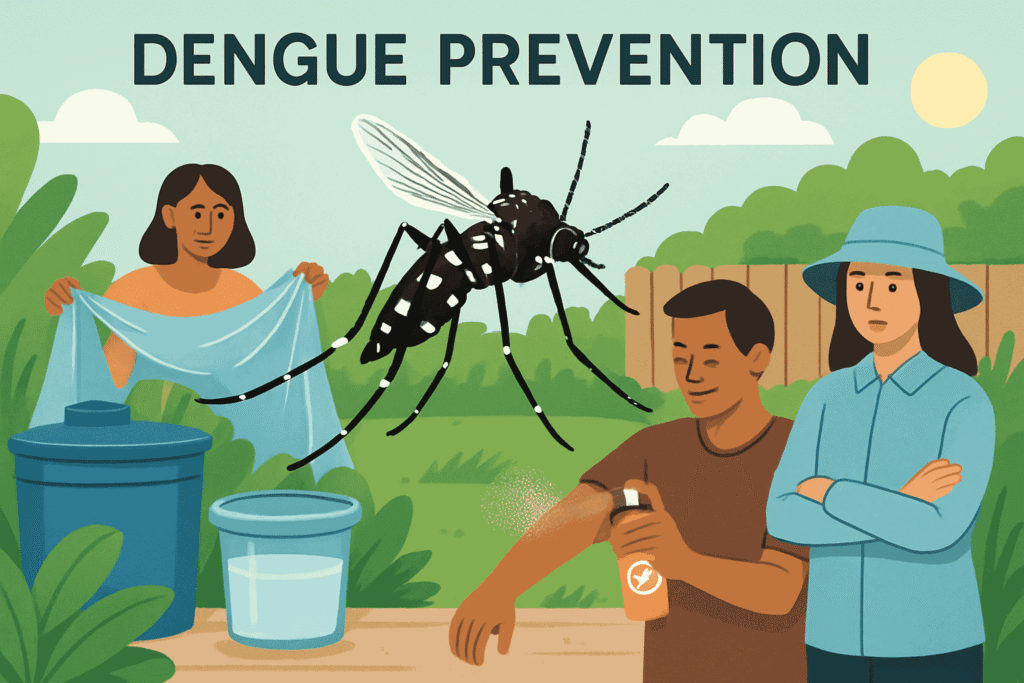
- Keep Your Home Mosquito-Free
- Remove stagnant water: Empty buckets, coolers, plant trays, and any container that collects water.
- Cover water storage: Ensure tanks, jars, and drums are tightly covered.
- Change water regularly: Replace water in flower vases and bird baths every 2 to 3 days.
- Personal Protection
- Use mosquito repellents: Apply creams, sprays, or natural repellents like citronella oil.
- Wear protective clothing: Long sleeves, pants, and socks help minimize exposed skin.
- Use mosquito nets: Although Aedes mosquitoes bite during the day, using nets while resting can be helpful.
- Protect Your Living Spaces
- Install mesh screens on windows and doors.
- Use mosquito coils or vaporizers indoors.
- Ensure proper ventilation to prevent cozy hiding spots for mosquitoes.
- Community Action
- Dengue prevention involves teamwork, not just individual effort.
- Join community clean-up drives.
- Report mosquito breeding sites to local authorities.
- Educate neighbors about preventing dengue.
- Vaccination (Where Available)
- Some countries have approved a dengue vaccine (Dengvaxia), but it is only given to people who have had a previous dengue infection.
- Research is ongoing to develop safer and more widely usable vaccines.
Why Dengue Is a Global Concern
Dengue is not just a local issue; it poses a global health threat.
- Climate change is expanding mosquito habitats.
- Urbanization creates more breeding sites.
- International travel spreads the virus across continents.
The World Health Organization (WHO) has identified dengue as one of the top ten global health threats.
Myths vs. Facts About Dengue
Myth 1: Dengue spreads from person to person.
Fact: Dengue spreads only through mosquito bites, not through touching, hugging, or sharing food.
Myth 2: Only dirty water breeds mosquitoes.
Fact: Aedes mosquitoes can breed in clean stagnant water as well.
Myth 3: Once you have dengue, you won’t get it again.
Fact: You can contract dengue up to four times—once from each virus type.
Myth 4: Papaya leaf juice cures dengue.
Fact: While papaya leaves may help improve platelet counts in some cases, there is no scientific evidence proving they cure dengue.
cases. Prevention through mosquito control remains the best option.
Conclusion: Together We Can Defeat Dengue
Dengue may seem intimidating, but it is not insurmountable. By understanding its causes and taking practical preventive actions, we can protect ourselves, our families, and our communities.
Every time you cover a water container, clean a cooler, or use mosquito repellent, you not only protect yourself but also help disrupt the transmission of dengue.
The fight against dengue is not about fear; it’s about awareness, responsibility, and action.
Let’s commit today:
- Keep our surroundings clean.
- Protect ourselves with repellents and nets.
- Spread awareness in our communities.
Together, we can work towards a dengue-free future.
Frequently Asked Questions (FAQs) About Dengue
- What is dengue fever?
Dengue fever is a viral disease spread by Aedes aegypti mosquitoes. It causes high fever, severe headaches, muscle and joint pain, rash, and fatigue. In some cases, it can develop into severe dengue, which may be life-threatening.
- How does dengue spread?
Dengue spreads when a mosquito bites someone infected with the virus. The mosquito then carries the virus and bites a healthy person. Dengue does not spread directly from person to person.
- What are the symptoms of dengue?
Common symptoms include:
- High fever
- Pain behind the eyes
- Muscle and joint pain
- Nausea and vomiting
- Rash and weakness
Severe cases may show bleeding, abdominal pain, or difficulty breathing.
- Can dengue be cured?
There is no specific cure. Treatment focuses on rest, fluids, and paracetamol for fever and pain. Avoid aspirin and ibuprofen because they increase the risk of bleeding. Most people recover in 1 to 2 weeks with proper care.
- Who is most at risk?
Anyone can get dengue, but children, the elderly, and people in crowded or tropical areas are more vulnerable. Travelers visiting dengue-prone areas are also at risk.
- How can dengue be prevented?
Preventing dengue involves controlling mosquitoes:
- Remove stagnant water from containers.
- Cover water storage.
- Use repellents and wear long clothes.
- Install nets or screens.
- Join community clean-up drives.
- Can a person get dengue more than once?
Yes. There are four types of dengue virus, so a person can be infected up to four times. A second infection may increase the risk of severe dengue.
- Is there a dengue vaccine?
Yes, Dengvaxia is available but only recommended for people who have had dengue before. For most people, preventing dengue through mosquito control is still the safest choice.
- What should I do if I think I have dengue?
See a doctor immediately for diagnosis. Drink plenty of fluids, rest, and avoid painkillers like aspirin. Seek urgent care if you notice bleeding, persistent vomiting, or severe abdominal pain.
- How can communities fight dengue?
Communities play a key role by cleaning public areas, removing waste, reporting mosquito breeding sites, and spreading awareness. Working together helps reduce outbreaks.
Final Note
Dengue is preventable. By keeping our homes and surroundings clean, protecting ourselves from mosquito bites, and working together as communities, we can effectively fight dengue.
The structure of this piece is excellent.